


i got this plant as catasetum longifolium but when it blooms, i was slightly disappointed for longifolium had been in my wishlist all these while.
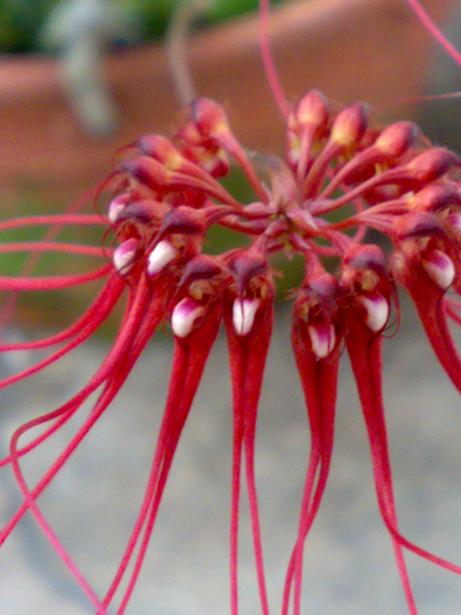
from the bloom it seems like Catasetum roseoalbum; the pink and white catasetums. catasetum roseoalbum is one of the accepted natural hybrid. it is a cross between catasetum longifolium and catasetum discolor.
the last pic here is the final appearance at its full bloom, about three days later.
i mange to find a list of natural catasetum hybrids and i would like to paste it here for future references
§ Catasetum × guianense (= C. longifolium × C. macrocarpum)
§ Catasetum × intermedium (Brazil
§ Catasetum × issanensis(= C. longifolium × C. pileatum) (Brazil
§ Catasetum × pohlianum(= C. hookeri × C. trulla) (Brazil
§ Catasetum × roseoalbum (Guianas). Ctsm longifolium x ctsm discolor
§ Catasetum × sodiroi (= C. expansum × C.macroglossum)
§ Catasetum × tapiriceps (N. Brazil ).ctsm pileatum x ctsm macrocarpum
§ Catasetum × violascens : Purple Catasetum (ctsm incurvum x ctsm discolor)
§Catasetum x perazolianum (ctsm ariquemense x ctsm denticulatum)
§ Catasetum × wendlingeri (ctsm planiceps x pileatum)
§ Catasetum xaltaflorestense (Catasetum schmidtianum x Catasetum osculatum)
this plant produces a very long spike, 28 inches and three quarter, flowers are relatively small, 1.5 inches in height and 1 inch across. a relatively small flower compare to the plant size. the bulb itself excluding the leaves are about 8 inches plus and i believe it can be bigger as this is the second bulb of the plant and it has already double it size compare to the previous bulb.
by the way, this is the plant that produces the root keiki that i mentioned in one of my previous post http://catasetum-ian.blogspot.com/2011/12/functions-of-catasetums-root-including.html




 the subsequent picture is the new lead bulb is optimal growth phase, most of the catasetums begins to flower at this phase. here you can see that the normal fat pseudobulb shape has not taken place yet and during this phase, they grow very fast and hence they require heavy watering and feeding.

 covering the bulb. by time these sheaths will fully enveloped the entire bulb.
