Friday, January 11, 2013

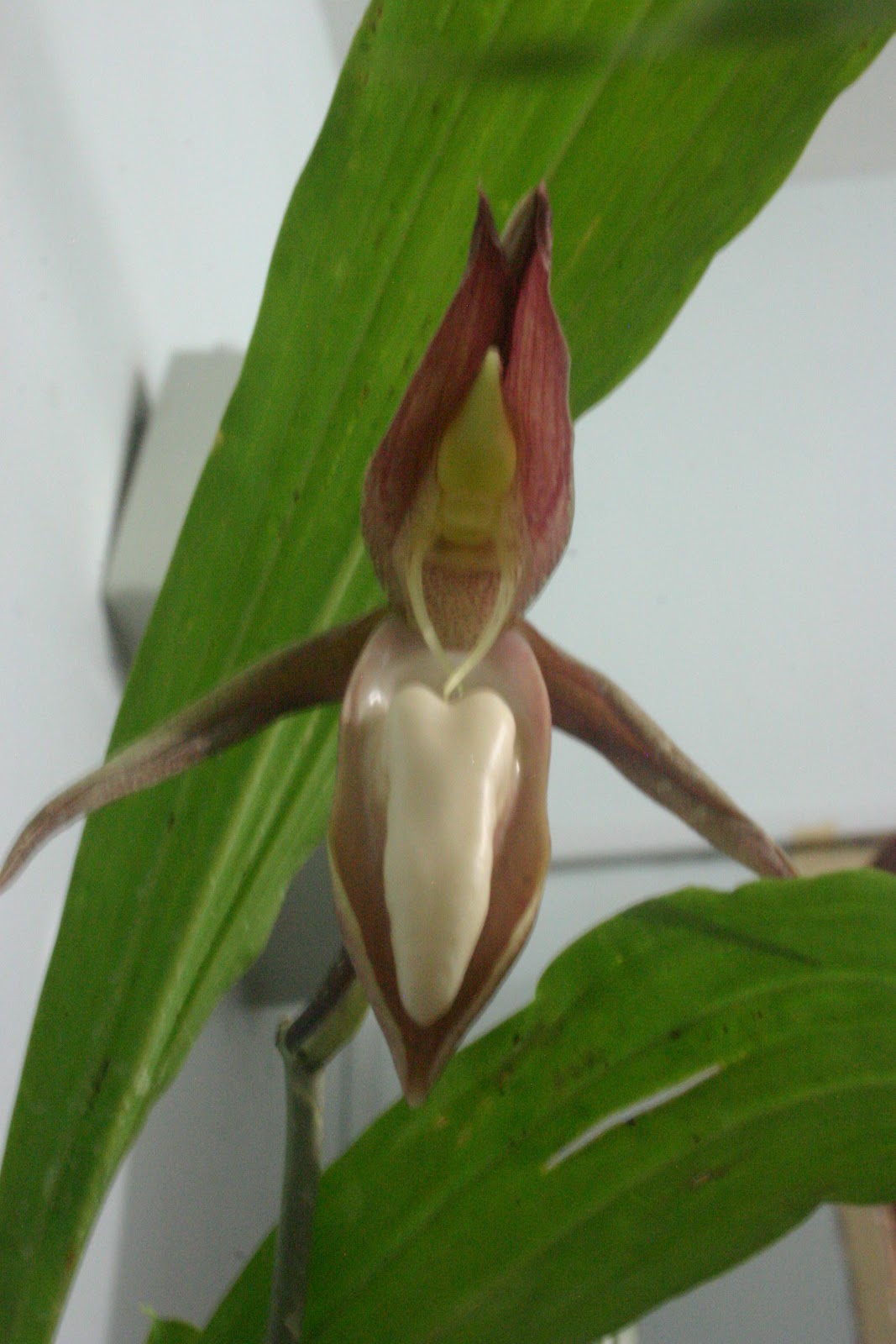
Catasetum John C. Burchett x Susan Fuchs

this is a complex hybrid, external appearance had high similarity with some variety of susan fuchs.

catasetum (socco x pileatum ) = ctsm Mary Spencer
catasetum Mary Spencer x catasetum imperiale = catasetum Joao Stivali
catasetum Joao Stivali x Susan Fuchs = catasetum John C. Burchett
catasetum Susan Fuchs = ctsm expansum x Orchidglade
and catasetum Orchidglade - ctsm expansum x pileatum


Thursday, December 20, 2012

catasetum pileatum 'green gold; x catasetum susan fuchs - Ctsm Penang type II

another sibling of the Ctsm Pileatum 'Green Gold' x Ctsm Susan Fuchs, i labelled this as Ctsm Penang type II. the flower has a prominent whitish callus, unlike the sibblings which is entirely maroon red. however the flower size is much bigger, the biggest one is about 8.5mm, with range of 7.9 to 8.5 cm.


Saturday, December 15, 2012

catasetum imperiale

this species was initially named catasetum pileatum var 'imperiale' but was later recognized to be a species by itself. another synonym is catasetum bungerothii var imperiale. the word imperiale is to used to denote the large bright color flower of this species.
some believe that it is still a variety of a pileatum, some regarded it as a species of its own and it is even thought be a natural cross between a macrocarpum and a pileatum, HOWEVER artificial crossing of these two species fails to reproduce any close resemblance of this species. one of the more commonly known cultivar of this species is the 'Pierre Courret'.

this plant came with an infected psedobulb, initially got the infection controlled and soon a new growth appears. but when the new growth's spike is semi developed, the backbulb started to turn yellow and one of the flower buds fell as well.
upon removal of the infected bulb i thought the whole spike is a goner but luckily three made it. although the imperiale is sort after by many catasetum collectors, but my favorite is still the white pileatum.


appearance of the spike, 3 flowers


close up on the lip

Thursday, December 13, 2012

catasetum pollination

for those who had been asking (including myself when i first started off with this genera), i would like to take this opportunity to show those that are interested in catasetum pollination

below here the first pic is the pic of a female flower, focusing the the stigma cap (the white structure sitting on top of the stigma cavity). the other light green structure with a pointed tip is the beak anther.
to start pollination, remove off the stigma cap, it has a sticky part that resembles the viscidum of the male pollen,

below the video clip shows the deposition of the pollina onto the stigma cavity. sorry that it is a little 'shaky' as i was doing it single handed while the other hand is holding the camera. 


the second pic below is how i labelled my plants after the pollinaiton. ALWAYS labelled them after you are done. included in the tag is the crosses of the parents, the pollen parent and the date of pollination. once the tag is lost, it is merely impossible to identify the crossing when they flowered, this is especially true for complex hybrids that involves back cross. (a single pod can give rise to progeny with different colors, shapes and pattern of hybrids)

a catasetum pods may take up tp 8-9 months for maturity but for sowing purpose, i harvest them when they are 75% mature at least. sowing a green pod is easier as one can skipped off the seed sterilizing process.
HOWEVER i had heard and experience it myself that some pods had a much shorter maturity time, the recent one i had was three months four days. initially i could not believe it myself either till i opened up the cracked seed pod and there is tonnes of seeds in it. 


below is an update on the progress of the five seed pods with labels attach. if the pods manage to mature, may try sowing with commercial media this time. will update in this thread if i do.

update on progress of the seed pod 7/1/2013
(pic below)

pic taken on 12/2/2013 (pic below), pod attaining full size 

22/2/13, one of the seed pod did not make it. down to three pods left. what a bummer....the seed pod on the left of the pic is discolored. 
.

Saturday, November 17, 2012

catasetum naso x jumbo pearl - second clone

this is the second clone i had for catasetum naso x jumbo pearl. you can also see the mark variation of the off spring, thought it is from the same parents. just to keep track of this clone, i tagged them "green cap light spots". 


first pic below, the entire spike

lateral view of the flower

view from inside of the labellum

close up on the detail of inner labellum

close up of the lateral edge of the lateral lobe of labellum, showing the mild serrated edges

frontal view of the flower

another view of the flower


the last pic below here is also from the same parents, you can see there the marked variation between the siblings. the one on top inherited most of the naso gene while the one below had the characteristic of both.

this is the reason why it is at times impossible to correct ID a hybrid, especially complex crosses (it is different if it is a cross between two primary species) once the tag is lost. that is why, i always make sure the tagging is done properly. one can also keep two tag for a plant, one tied to the hanger/pot and another one buried right under the pot.

Monday, November 12, 2012

Catasetum Penang (Catasetum pileatum 'Green Gold' X Catasetum Susan Fuchs

catasetum penang, a cross between pileatum and susan fuchs. there are many varieties of ctsm penang but the red one seems to be most popular among catasetum hobbyist. initially when i bought this hybrid i was hoping for some green form of a penang due to the green gold variety of pileatum that is used as a parent. however the outcome of the cross is a deep red penang.


this particular division is rescued from a damaged bulb that got crushed when the mother plant fell on the floor. never that that i would be strong enough to produce a spike on the first growth. what i like about this plant is the shape and color of the flower. very well balance, could be a good parent for making wonderful hybrids!

Thursday, November 1, 2012

catasetum tabulare

the name of this species is derived from the word tabularis which means flattened horizontally referring to the large flat structure of the callus. the flowers of this specie is large. most prominent feature of this species is the large triangular callus at the center of the lip. the callus is often smooth except in at least one of the variety, namely catasetum tabulare "rhinophorum". this variety has a very rough callus appearance, and personally it is my most favorite tabulare and shall remain in my wishlist.


the only flower that survived the rainy spell, had three initially but two buds were damaged by the heavy rain

appearance of the flower on initial blom

close up on the callus of the labellum

full bloom of the flower in the lower pic


lateral view of the flower at full bloom